
Flasher Bulbs
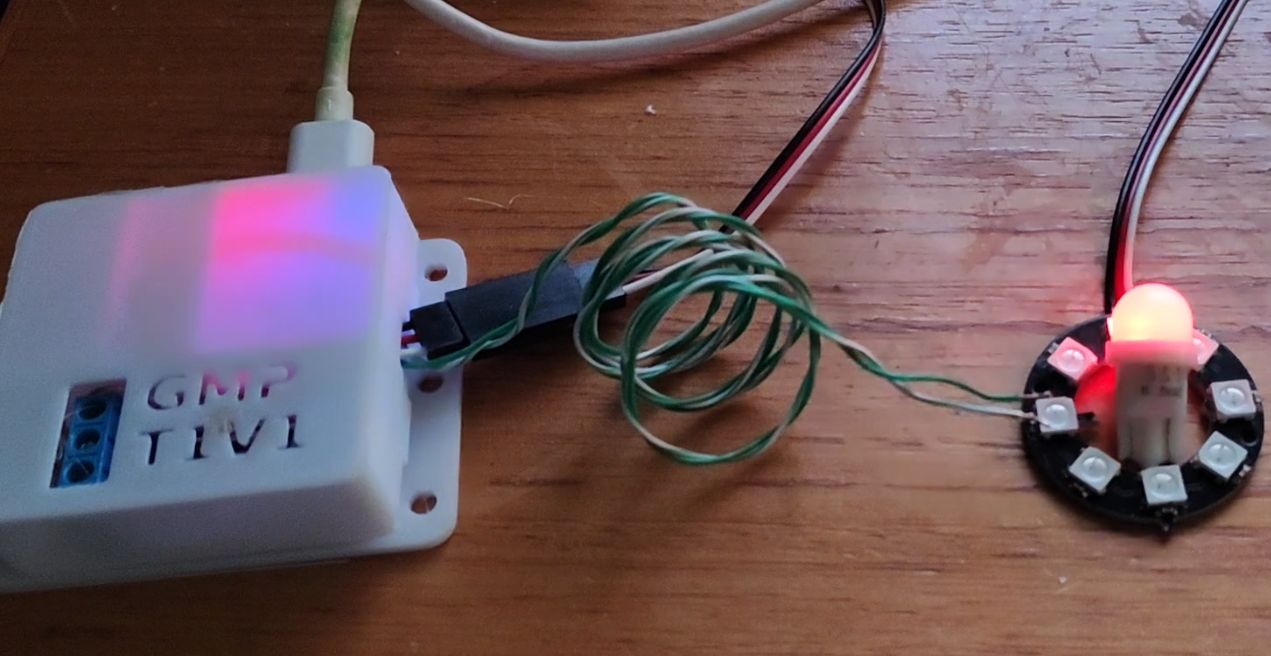
I set about emulating #455 flasher bulbs with modern hardware, specifically RGB LEDs and microcontrollers. I did this in response to issues raised in this forum post https://www.aussiearcade.com/topic/105680-455-flasher-bulbs, and from curiosity to see if it could be done for a reasonable price without mass manufacturing.
Criticisms of current LED flasher lamp offerings:
- The colour is not right
- The flashing rate is not right
- They are insufficiently random
- They don’t look the same
Ideally, the digital-electronic version will overcome these problems.
Hardware
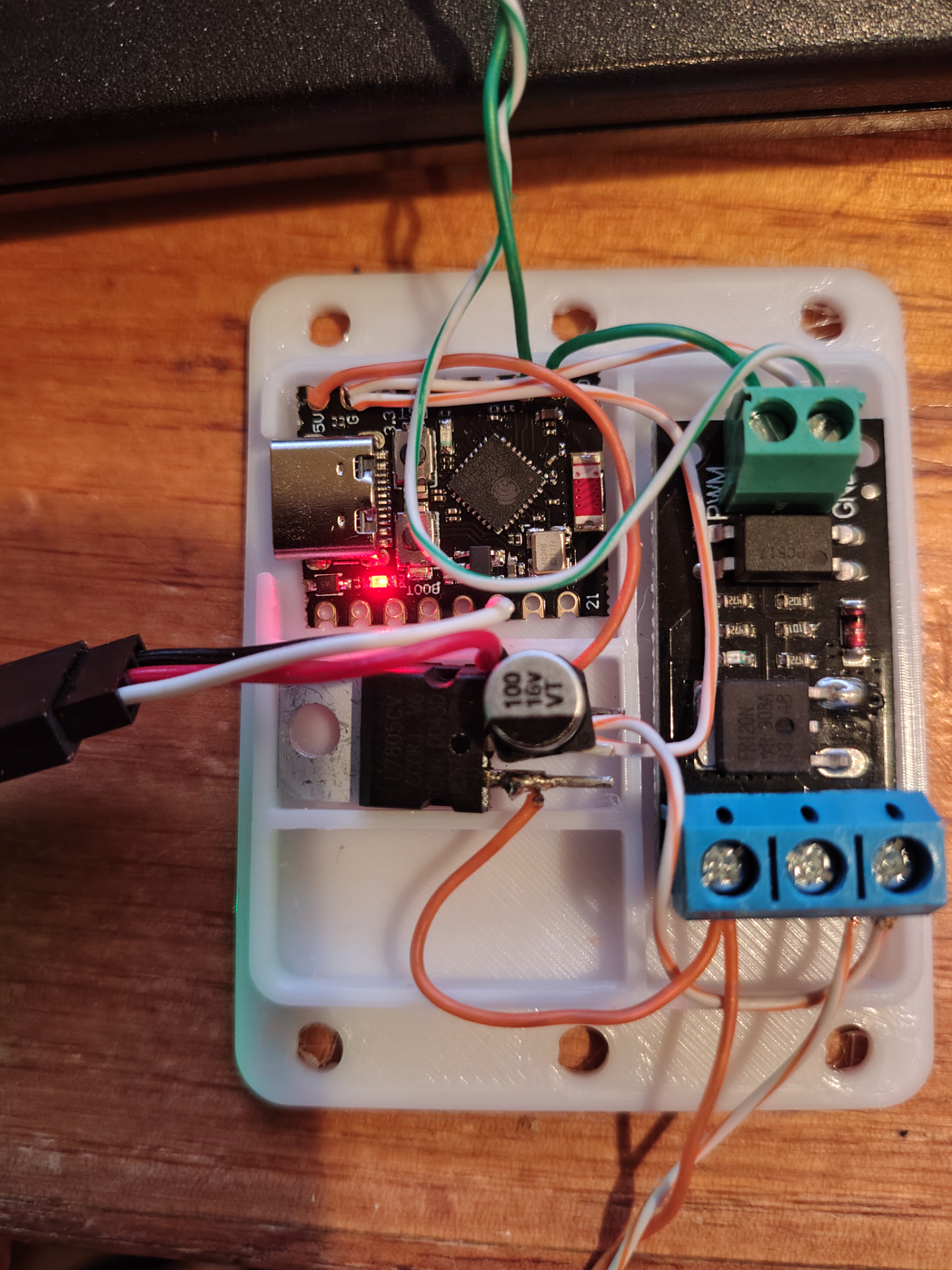
Since flashers are rarely single, it seems a good idea to minimise cost per bulb. To that end a single “box of smarts “, the General Mod Platform (GMP) drives a a string of LEDs with power, random timing, colour correction, and “flasher bulb” characteristics (each lamp warms up, and cools off, varying in intensity and also colour). The LEDs can easily sit over the empty socket’s of various bulbs, held in place by whatever means is convenient (tape, dowel, etc.). Power comes from a lamp socket plug made from an old bulb with the correct fitting. The GMP takes AC or DC.
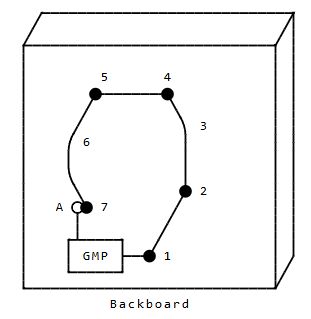
| Item | Description |
|---|---|
| GMP | The General Mod Platform, a small plastic box of tricks |
| A | A bulb base used as a plug to access General Illumination power |
| 1-6 | RGB LEDs attached to backboard over the top of existing empty bulb sockets |
| 7 | An RGB LED attached over the top of “A” |
Prototype Video
This video shows the first prototype fitted to a Pat Hand machine:
The code supports:
- Up to 10⁑ lamps
- Configurable random delay between blinks
- Configurable random duration of blinks
- Bulbs are desynchronised; each bulb has its own random on and off times
- Colour profile for bulb turning on (the colour of the light changes from cold to hot)
- Colour profile for bulb turning off (the colour of the light changes from hot to cold)
- Support for colour-matching to warm white LEDs, daylight LEDs, bright white LEDs, and incandescent bulbs
- Calibration for different RGB LED variants
- Choice of 16,777,216 colours for each LED (including OFF)
This is enough to overcome the criticisms of LED flasher bulbs, and ensure the GMP bulbs:
- Have the right colour
- Flash at the right rate
- Have plenty of randomness
- Turn on and turn off like incandescents. with changes in brightness and colour
Potential future options
- Using 2 (or more) RGB LEDs as a single bulb, to double the light intensity if needed
- Addition of high-brightness flasher bulb emulation
- Different randomisation characteristics per bulb allowing for slow and fast flashing bulbs
- Non-linear randomness allowing for bulbs with a regular flash but occasional longer, or shorter durations or delays
- Constant on bulbs
- Constant on bulbs with colour matching so they look the the bulbs you remember, or any colour you want
- Synchronised bulbs, some bulbs are synchronised because it looks better that way, like 2 bulbs behind “Game Over” instead of one, and they blink together
Potential wizz-bang options
- High/low bulbs. The bulb is never off, but changes from configurable low brightness to high brightness
- Solid colour bulbs
- Rainbow bulbs; the bulbs move through the colours of the rainbow
- Twinkle; the bulbs twinkle like stars.
- A web site for the flashing bulb. Yes, that’s right, you can browse from your phone to a web site in a lamp in your 1950s pinball machine. Potentially this would let various parameters be updated easily - letting you dial-in your bulb’s operation. Also bragging rights.
- Light chasers and such
- Flicker like a fire
- Bright flash, followed by a couple of not so bright flashes (Robocop backglass explosions)
Potential wizz-bang hardware options
- Constant attract. The bulbs run from an independent plug pack so the machine looks attractive and powered on while it is actually off
What it does not do
It does not replace controlled flashers. If it’s a straight on / off, with times around half a second or more, it could be done with a little more electronics, an input lead, and software. If it’s a PWM (Pulse Width Modulation) controlled bulb, then a little more electronics, an input lead, some fiddly software, and some time spent doing data capture on a real machine.
⁑ It probably supports thousands, certainly hundreds, but I’ve tested with 10.